Tuesday, April 2, 2013

Iain Duncan Smith petition: 120,000 urge smug minister to prove he can live on £7.50 a day

A market-trader told IDS he was left with just £53 a week after the new round of cuts slashes his housing benefit and council tax assistance

Smug: Life is easy for Iain Duncan Smith 
Smug: Life is easy for Iain Duncan Smith
Rex
 
Living rent free in a £2million home with an annual salary of £134,565 hardly gives Iain Duncan Smith the experience to comment on how to get by on a pittance.

But the arrogant Work and Pensions Secretary yesterday laughingly claimed he could survive on the £7.50 a day market trader David Bennett is left with after the spiteful Tory cuts that will all but destroy the safety net of the Welfare State.

His astonishing claim came after he even tried to insist the savage £2.5billion raid on the poor that will leave hard-pressed families £891 worse off while giving tax breaks to millionaires was “fair”.

Furious David said: “These ministers, in their mansions and ivory towers, need to get out in the real world to find out what it is like.”

Millionaire Mr Duncan Smith spoke to David when the pair appeared on Radio 4’s Today programme to discuss the welfare reforms.

The 51-year-old stallholder told the minister he was left with just £53 a week after the new round of cuts slashes his housing benefit and council tax assistance.

That works out at £7.50 a day and when Mr Duncan Smith was asked if he could live on that, he replied smugly: “If I had to I would.”

David, of Hunwick, Co Durham, added: “The £53 a week is what I am expected to live on, pay my bills and feed my kids.

"I would love for Mr Duncan Smith to come with me and work in a market for a week and see what it is like.

“He should go to any market in the North East, everyone is facing the same as me.

"Market traders usually get enough in the summer to see them through the winter, but we’ve had no summer.

"So far this year I’ve worked 21 days because of the weather.

Iain Duncan Smith, Secretary of State for Work and Pensions 
Rich: Iain Duncan Smith is a multi-millionaire
Rex
 
“You’ve got to remember you’re paying rent for your stall and petrol to get there.

"You have to pay the council to work. So, in bad weather it doesn’t make sense.

“I’ve been punished for trying to do the right thing, setting up my own business and looking after my kids.
"So much for David Cameron’s Big Society.”

David spoke as the first round of savage cuts in the cruellest shake up since the Welfare State was created after the Second World War came into force – the bedroom tax and council tax aid reductions.

His £57-a-week housing benefit, recently slashed by £18-a-week, covers barely half his £400-a-month rent.

He pays for the rest – including £174-a-month in utility bills – with his £50-a-week working tax credit, leaving him to live on his £2,700-a-year market earnings.

David is being forced out of his home into a council house because he can’t afford the rent.

The divorced dad-of-two will need two “spare” rooms because his children stay with him for half of the week.

But that means he will be clobbered by the bedroom tax, ­stripping a further £14.25-a-week from his housing benefit.

Contrast that with Mr Duncan Smith’s lavish lifestyle in his mansion with at least four spare bedrooms on a sprawling Buckinghamshire estate.

The home, given by his father-in-law, has a swimming pool, tennis courts and sits in acres of beautiful countryside.

And while David, who snubbed the dole after being made redundant from a previous job in 2010, struggles to get by on his meagre earnings, Morgan-driving Mr Duncan Smith enjoys countless expenses supplied by the taxpayer.

Iain Duncan Smith driving his convertible Morgan
Lavish: Iain Duncan Smith driving his convertible Morgan Matrix
 
The market trader’s £53 a week wouldn’t even cover the minister’s perks. He recently billed the taxpayer £110 for a Bose bluetooth mobile phone headset to use in his car, according to official parliamentary accounts.

He also claimed £12.42 for a USB cable.

Mr Duncan Smith’s phone bill alone has been more than £53 every month in the latest financial year.

He owes his reported £1million wealth to the aristocratic Fremantle family which he married into in 1982.

The politician and wife Betsy Cottesloe were given use of the family home by her dad the 5th Baron Cottesloe.

Mr Duncan Smith’s comfortable ­existence will further infuriate David, given his comments on the radio show.

The former credit manager, who works up to 70 hours a week on his stall, decided to set up his own business rather than claim unemployment benefits, having worked all his life.

In his first year he made a loss. But between December 2011 and January this year he scraped a profit of £2,700 – or just over £50 a week.

Because he managed to turn a small profit the council cut his housing benefit by 25%.

The Old House, part of the Swanbourne Estate in Buckinghamshire. The Grade II listed 16th Century property in Swanbourne is the home of Tory Work and Pensions Secretary Iain Duncan Smith, which he inherited from his father in law
Plush: Minister's £2m country pile
Steve Shepard
 

It states: “Iain Duncan Smith would be called upon to live on this budget for at least one year.

“This would help realise the ­Conservative party’s current mantra that ‘we are all in this together’.

“This would mean a 97% reduction in his current income, which is £1,581.02 a week or £225 a day after tax.”

By last night - just hours after the petition was launched - more than 100,000 names had been added.
The Tory-led Coalition’s vicious assault on the poor means thousands of people face paying the bedroom tax for nine years because of a shortage of homes.

Figures show councils will be unable to rehouse 19 out of 20 families looking to move to smaller properties to avoid the heartless penalty.

Around 330,000 will be hit by the tax. But according to a parliamentary answer only 33,000 one-bed homes became ­available last year.

Labour welfare spokesman Stephen Timms, who unearthed the figures, said it would take at least nine years on current forecasts to find a smaller home.

He added: “These figures expose the cruelty of this tax and the great majority of those being hit can do nothing about it. This is a deeply cynical measure.

“It is a straight-forward money raising move dressed up as something else.”

The petition can be found here.


Tale of the tape

Iain Duncan Smith, 58

Job: Work and Pensions Secretary
Earns: £134,565 a year or £2,587 a week. Believed to have earned £1million as an after-dinner speaker
Marital status: Married to Betsy Cottesloe, daughter of 5th Baron Cottesloe
Children: Four – Alicia, Edward, Harry and Rosie
Homes: Rent free £2million 16th-century farmhouse with pool and tennis court in Swanbourne, Bucks, owned by his father-in-law. Made £600k selling Fulham house in 2002.
Motor: Spotted driving a Morgan sports car

David Bennett, 51

Job: Market trader
Earns: £2,700 a year or £53 a week
Marital status: Divorced
Children: Two
Home: Rented three bedroom house in Hunwick, Co Durham
Motor: Battered 12-year-old Transit van

Monday, April 1, 2013

Petition to challenge IDS to live on £53 a week

This petition calls for Iain Duncan Smith, the current Work and Pensions Secretary, to prove his claim of being able to live on £7.57 a day, or £53 a week.

On this morning's Today Programme David Bennett, a market trader, said that after his housing benefit had been cut, he lives on £53 per week. The next interviewee was Work and Pensions Secretary Iain Duncan Smith, who was defending the changes. The interviewer then asked him if he could live on this amount. He replied: "If I had to, I would."

This petition calls on Iain Duncan Smith to live on this budget for at least one year. This would help realise the conservative party`s current mantra that "We are all in this together".

This would mean a 97% reduction in his current income, which is £1,581.02 a week or £225 a day after tax*.

Please join me.


To:
Iain Duncan Smith, Department for Work and Pensions

 
I call on Iain Duncan Smith to prove his claim to be able to live on £7.57 a day, or £53 a week, by doing so for one year.
 
Sincerely,

[Your name]

CLICK HERE TO SIGN

This is the nastiest government Britain has ever had – TUC leader


frances o'gTUC general secretary Frances O’Grady has said the government’s education policies are driven by ideology, not by the needs of children and risk lasting damage to our education system.

Speaking at the the NASUWT conference in Bournemouth yesterday, she said: “Working people in both the public and private sectors are having an incredibly tough time – the average worker is worse off today, in real terms, than they were a decade ago.

“With the cost of living rising, ordinary families are really struggling, only ever two wage packets away from disaster and this is the first ever generation of school-leavers who look set to be worse off than their parents.

“This is the most ideological, most right-wing and plain nastiest government Britain has ever had. It is cutting its way into a triple-dip recession, shrinking the public services we all rely on, and attacking benefits, with the low-paid, women and children hit the hardest.

“All this as we live through perhaps the gravest economic crisis any of us has ever seen. A crisis that wasn’t caused by teachers having gold-plated pensions or because teachers sat around the staff room awarding each other obscene bonuses, living the life of Riley and putting down bets with other people’s money.

“It was a crisis caused by the greed of bankers, by growing inequality and falling living standards propped up by unsustainable private debt and by too much economic power being concentrated in the hands of too few.

“That’s why the TUC is calling for a new kind of economy that serves ordinary working people and not just those at the top. We want investment in jobs, greener growth, and root and branch reform of the banks – not more of the madness of austerity.

“We want our public services and our welfare state protected, and funded by fair taxes – including a Robin Hood Tax to crack down on the kind of speculation that caused the mess in the first place.

“And we want a fair share of the wealth we all produce to help inject some demand back into the economy and provide a decent standard of living for all.

“Our argument is simple – Britain needs a pay rise. That’s the best way to build consumer confidence, to get people spending and to get the economy growing again.

“But the only way we’ll win that is if ordinary people have a bigger say over how our economy is run. People now agree that the balance of power has swung too far in favour of big business. Growing inequality is the problem and stronger unions have to be part of the answer.

“Our job is to win hearts and minds, and build public confidence that we can build a stronger, fairer, more equal Britain for the long term. And a key part of that is education.

“But as you know better than me, the government’s education policies are not driven by the needs of children, but by powerful vested interests and right-wing dogma.

“Cuts, austerity and semi-privatisation are pulling the ladder from beneath our children and young people. More children go to school hungry, more teenagers are losing hope in the future and more young people are joining the dole queue with youth unemployment almost back up to a million.

“But from policies on early years to university funding, what matters to ministers isn’t a solid evidence base – it’s ideology.

“Michael Gove is steaming ahead with his so-called reform agenda, even though three-quarters of schools are rated as “good” or “outstanding” by Ofsted.

“We don’t need a Maoist-style permanent revolution led by millionaires who have little experience or understanding of the real world where most of us live and learn.

“Instead of cutting, the government should be investing in the quarter of a million places our schools desperately need for the future. Instead of picking a fight with unions, the government should pause for breath and listen.

“The government is privatising, deregulating and outsourcing our schools in ways that could leave lasting damage to our children’s education system.

“The government isn’t listening to rational argument. The rapid acceleration of academies is a headlong rush driven by blatant inducements and cash incentives.

“Academies are all about selection by the back door, with too little accountability, and too much macho management. And then there’s the free schools, although given the amount of taxpayers’ money being squandered on this right-wing vanity project, they certainly don’t come free.

“And from what I can see, some of them don’t even deserve to be called schools. With one in ten teachers in free schools unqualified, they are designed to deskill your profession – and that is unfair to children, parents and teachers.

“But, we all know what the real aim is here. Because, let’s face it, unity between parents and unions is the last line of defence between our children and the government’s drive to break up our education service so they can serve it up to their right wing friends.

“That’s why the government is attacking your terms and conditions. Spiralling workloads, pay freezes and pay caps – now extended by another year – have all had a devastating impact, not just on teachers’ pockets but on teachers’ morale.

“On top of that, there are the hikes in pension contributions and the government still refuses to publish the evaluation of the pension scheme.

“Then, to add insult to injury, the government throws a hand grenade into national pay and progression, wanting to pit teacher against teacher, by introducing local performance related pay.

“Giving head teachers almost unlimited discretion, increasing the risk of blue-eyed boy rewards, and opening the way to a potential deluge of discrimination claims. This is a profoundly backward step, which is unfair, inefficient and divisive and which will make recruitment and retention much more difficult.

“You have the TUC’s total support in the campaign to defend fair pay and our education service. I applaud the NASUWT and NUT for working together, in unity, on behalf of children, parents and the nine in ten teachers in Britain that you represent.

“Your plans for a joint programme of industrial action are intelligent, measured and reasoned, and we can make it a joint cause with parents and local communities.

“Parents know that teachers do not take industrial action lightly and they suspect the government is playing politics with their children’s education.

“The NASUWT and NUT have tried to engage with the Secretary of State at every available opportunity, and there is still time to come to an agreement – if the government starts talking and listening to teachers.
“Our schools are simply too important, too precious, to be left to the market. We want high-quality, publicly-funded, publicly-accountable education accessible to all.

“But if the government refuses to listen, refuses to compromise, refuses to negotiate, then for the sake of education service, for the sake of our public services and for the sake of all our communities, the TUC will be ready to co-ordinate industrial action, wherever workers have voted for it.

“Education matters. It’s about human enrichment and confidence, the power of learning to transform lives and about every child having the chance to fulfil their true potential in life.

“But education is nothing without educators. You are the people who make it happen, who shape young minds and young lives and who see the promise in every child and help them discover it too. The very least you deserve in return is respect and fairness at work. To be well treated, well rewarded and well respected for the life-changing work you do.

“So in the weeks and months ahead, the TUC will continue to work closely with NASUWT and all the education unions, to speak up for teachers and to urge the government to change course.”

Union News

So, Iain Duncan Smith thinks he could live on £53 a week

That's just half the cost of his bluetooth headset.


The Telegraph's Rowena Mason reports:
Iain Duncan Smith has claimed he could live on £53 per week - the amount given to some benefit claimants. The Work and Pensions Secretary said he could survive on £7.57 per day if he "had to", as he defended a raft of cuts to welfare payments coming into force today.
He'd have to cut back a bit if he did so. According to his parliamentary expenses, he spent £110 - two week's worth of benefits - on a Bose bluetooth headset for his car, and another £12.42 on a USB cable (I mean, come on, who spends more than a fiver on a USB cable?). His monthly phone bill has been over £53 every month in the latest financial year, so that's another week each month he can't eat, travel, heat his house or, really do anything. And given he can claim for travel, he may have forgotten that that £5.30 he spent on taking one tube trip within his constituency also comes out of the £53. Just ten of them and he'd go hungry.

But the bigger point is that it's easy for someone like Iain Duncan Smith - or me, or, most likely, you, New Statesman reader - to showboat about living on £53 for a week. Just shift some social events around, cut out meat and booze for a while, be more aggressive about using up left-overs, and you've pretty much done it. You can watch TV instead of going out, and lentils get boring after a while, but a little turmeric makes them interesting enough to eat for a bit.

But when the next week comes round; and the next; and the next; and still £53 is all you have to live on, it gets harder. Do you give up social events entirely? What happens when your TV license runs out? You may have some books lying around the house now, but you'll finish them soon enough. And cooking cheap tasty food is easy when you have store-cupboard essentials; it gets harder when you not only have to factor in the cost of them, but also the cost of the electricity you use to cook. That's not even beginning to examine whether Iain Duncan Smith would be eligible for Housing Benefit in his hypothetical example, or if he'd still be able to happily live rent-free in a £2m house. It seems doubtful that he'd move out to fulfil the example.

The fact is, if you've never had to live on that little, it's hard to imagine what it's like. The realities of being poor are vastly different to the cheery version the rich put themselves through for charity, or to prove a point, and it's easy to guess which IDS is imagining.

New Statesman

The really frightening thing about today's cuts is that no one knows their combined impact

The sums just don't add up.
"How will I cope with the bedroom tax? I already have more outgoings than ingoings. I don't have my heating on, I don't have my fridge on. I buy reduced food, 10p loaves of bread. I go to the swimming pool to shower so I save gas. I can't make any more savings."
This is Debbie, 45, from Newcastle.

Until a few months ago, she claimed no benefits and was paying her own rent. Then she suffered a serious illness and lost her job as a support worker. She is thankful her £71 rent is currently being covered by housing benefit, but is struggling to survive on just £71 a week Employment Support Allowance. As of this month, she will be hit not only by the bedroom tax, but will also face a £64 council tax bill as Council Tax Benefit is withdrawn.

Crisis is working with Debbie to help her rebuild her life, but our fear is that these measures could leave her, and thousands of others like her, in serious trouble.

Debbie faces losing her home, and with a severe lack of one-bedroom properties in the area, she is justifiably scared about the future. She is one of millions struggling with a bewildering array of cuts that come in April 2013. The one thing they have in common is that they all hit those with least to lose - those already closest to homelessness.

The really frightening thing about today's cuts is that no one knows their combined impact. Indeed, the influential Public Accounts Committee has expressed concern that:
"The Department is introducing these significant changes without comprehensive modelling of the likely outcome on individuals"
The scale is enormous: 660,000 households will be hit by the bedroom tax; 2.4 million households by the Council Tax Benefit cut; 56,000 households by the overall benefit cap; 9.6 million households by 2015/16 by benefits uprating; 1.36 million households by Local Housing Allowance cuts; 500,000 disabled people will lose out when DLA becomes PIP. Last year 1.7 million grants and crisis loans were made to people on the brink of destitution or rebuilding their lives following homelessness - these are to be abolished, cut and localised. Even Legal Aid for housing and benefit disputes is to be stopped, so people who believe they have been treated unfairly will have no power to challenge.

The result for households budgeting for these multiple cuts will be a cold, bleak April of misery, debt, food banks, unheated rooms, unpaid rent and homelessness. Leaving aside the moral repugnance of forcing the poorest in our society to bear such a burden, this is going to cost us all dearly.

The price to the public purse of keeping someone in their home pales into insignificance next to the cost once they lose it. The price of B&Bs, hostel rooms, A&E departments, mental ill-health and rough sleeping services is enormous. These cuts are not only cruel - they are counter-productive for us all.

And they come at the worst possible time. Homelessness is already rising as the economic downturn and previous cuts take their toll. Over the past two years rough sleeping has risen by 31 per cent, and the number of households accepted as homeless by local authorities has gone up by 26 per cent. Unemployment and underemployment remain stubbornly high.

In the words of Debbie: "It will be impossible to cope - the sums just don't add up." I couldn't put it better myself. The sums don't add up for Debbie, and they don't add up for society either.

New Statesman

Pushed Over The edge By Benefits Fear

Reblogged from Samuel Miller:

12/6/12

to me
Hello samuel i do hope your well.....i was at my uncles funeral yesturday he hung him self last monday...he was disabled and was told he was fit for work. This is what upsets me the most because am not well and going through this my self i cant help my own friends an family .i got a letter saying iv got to got to court with my appeal now.like i havnt waited long enought. I really hate these ppl for what they are doing


10:22 PM (15 minutes ago)

to me

hi samuel...... i hope your well and had a good xmas,new year,an now easter,,,,sorry i havent bin in touch,,,,with having two court cases to prepare for an not being able to pay bill ect,i have been so depressed pluss with my uncle killing him self the day before my birthday..........i just though you would like an update on peter 


Pushed over the edge by benefits fear

A WOMAN whose disabled partner was found hanged is warning of the “devastating’’ effects of impending changes to disability benefits.
 
Christine Graham is speaking out after attending the inquest of 49-year-old Peter Hodgson, which returned a verdict of suicide last Friday.

Mr Hodgson was found dead at his Cleator Moor home just a day after he received a text message telling him to attend the Jobcentre. He had previously sent Christine, his partner of 13 years, a text saying: “I give up.’’

Now, only days before the Disability Living Allowance is replaced by a new scheme, Christine continues to be concerned about those who face upheaval due to the changes.

“Peter was vulnerable,’’ she said. “The text scared him so much. He had been depressed for years but he could keep that under control. It was the text which pushed him over.

“I want people to realise the effect of these changes on people’s lives. These changes are terrifying to vulnerable people and their concerns need to be listened to.

“It can have a devastating effect on people’s lives. As someone said after Peter died, he won’t be the first person to die because of this, and he won’t be the last.’’

Mr Hodgson had been unable to work after he suffered a brain haemorrhage and a stroke and had his leg fused following a football injury. He had previously worked as a lifeguard and at Brannan’s Thermometers.
Christine said: “You only had to look at Peter to realise he couldn’t work.’’

Mr Hodgson also wore a calliper and couldn’t grip with his hand. He had been worried that if he didn’t take some sort of work, his benefits would be stopped.

Last July, Mr Hodgson had been called into Whitehaven Jobcentre to see whether he would be suitable for volunteer work. He subsequently received a text on the afternoon of November 26. The message didn’t state a date but a subsequent letter was sent days after Mr Hodgson’s death with an appointment for December 17.

It was this text, Christine said, which had pushed her partner over the edge.

Four months after his death, Christine is trying to move on with her life. “I’m managing and I know nothing will bring Peter back. But I still believe if he hadn’t received the text he would still be here now. He had been perfectly fine until then.’’

After The Whitehaven News ran Peter’s story in December, there was an overwhelming response from readers.

From April 8, Disability Living Allowance, or DLA – the benefit which helps many pay for care and mobility costs – is being scrapped and more than two million disabled people will lose the support they rely on. The replacement – Personal Independence Payment (PIP) – is designed to cut £2.24billion annually from the welfare budget by 2015-16. The number eligible for the new award will be smaller and the assessment criteria are narrower.

According to the Government, the changes will see around 500,000 people lose their benefit.
Speaking this week about the new disability reforms, the Paralympian and campaigner Tanni Grey-Thompson, said: “People are either shown as amazing Paralympians who are competing for their country, who are incredible individuals, or benefit scroungers. What I don’t want to see is disabled people ghettoised and locked away like it was when I was young. The danger is if we just keep knocking disabled people back then we’ll turn the clock back 30 years.”


Labour’s task for the next 2 years [Michael Meacher MP]

Today the infamous bedroom tax kicks in, along with a whole slew of other benefit-cutting measures including a 40% cut in Council Tax benefit for those who are not pensioners, a limit on uprating of all benefits to 1% which (since inflation is currently 2.8%) means a real terms cut of 1.8%, and a cap on housing benefit which is expected to force 80,000 households out of their homes to migrate perhaps hundreds of miles away.   The bedroom tax is such a vicious demonising of the poor – at the same time that the bankers and super-rich who caused the financial crisis are getting off scot-free – that it may well turn into a defining moment for this government, just like the poll tax did for Thatcherf in 1990.   All these measures will cause such anger, bitterness and despair that civil disobedience, demonstrations and rioting must be expected in this next year.

The Tories seem hell-bent on turning public opinion against themselves and making a spectacular self-destruct.   But Labour cannot rely on Tory suicidal tendencies continuing indefinitely.   As the next election draws nearer, the Tories instinct for self-preservation should never be under-estimated.   In preparation for that moment Labour needs to act on 4 points:

1  Labour must vigorously refute (which, astonsihingly, it has not done so far) the constant Tory canard that Britain is in its current dreadful state “because of the mess Labour left behind”.   The lie to this is that in 2007, just before the crash, UK net debt stood at 38% of GDP – the second lowest in the G7 leading economies, and exceptionally low by UK historical standards – far lower than in all but 2 of Thatcher’s 11 years.   The budget deficit only grew from 3% in 2007 to 11.6% in 2010 because of the bankers’ bailout.   There was no Labour over-spending.

2  Labour needs to say much more confidently than it has done so far that this agony of austerity imposed by the Tories is not necessary and not inevitable.   A growth policy, which is desperately needed, could be generated without any increase in public borrowing, by switching Mervyn King’s further £25bn tranche of QE from the banks to industrial investment, by taxing the ultra-rich on the £155bn gains they’ve made (according to the Sunday Times) over the last 3 years, and/or by instructing the nationalised banks RBS and Lloyds to prioritise their lending on jobs in house-building and infrastructure.

3  Labour has got to take a stand on the Welfare State and fight back against the ugly Tory tactic of trying to turn ‘strivers’ against ‘shirkers’.   We should certainly promote those who work hard and aspire, but we should make clear that doesn’t mean abandoning jobseekers who’re trying hard to get a job or disabled persons victimised by DWP’s Atos or those on housing benefit (most of whom are in work but on extremely low wages) caught in a trap by fast-rising rents.   What is wrong is Osborne’s insanely destructive economic policy, not the poorest sections of society penalised by the folly and arrogance of the bankers.

4  And Labour must start campaigning across the country on key themes, not just issuing press releases or contesting (and usually winning) debates in the Commons.   People are crying out to be told what Labour would do - not the details of the election manifesto which no party at this point would reveal, but rather the central principles that the party stands for to repair the Tories’ slow-motion car crash.   Hammering home the 3 principles above would make a great start.

Michael Meacher MP

Government Declares War on Disabled People and the Poor

Graffiti is pictured on a pillar outside

On the weekend before the most savage cuts to social security in generations are introduced, the Tory party have gone on a media offensive to attack sick and disabled people or those who are unemployed, low waged and poor.

Minister for Murdering Disabled People Esther Mcvey began the assault with a vile piece of propaganda in the Daily Mail on Saturday.  Mcvey claims that many people who are “officially classed ‘disabled’ are no such thing”.  Her nasty diatribe comes in advance of the changes to disability benefits which will see around a fifth of disabled people lose vital support.

This is a woman with so much real world experience that she still lives with her business-owning dad at the age of 45.  Despite a half-arsed attempt at setting up a business, the nearest Mcvey has ever come to real work was sitting on the GMTV sofa.  Is it any wonder we are in such a mess whilst chinless gimps like Cameron, Osborne, Clegg and Mcvey run the country like a bunch of posh teenagers who have never understood what it is to stand on your own two feet?

Elsewhere internet con man Grant Shapps was attempting to claim in the Daily Mail that just because some people get better or die before a claim for sickness benefits is assessed that this somehow proves everyone on the benefit is a scrounger. Rarely has the nasty party sunk any lower.

Shapps may not be as privileged as many of his Tory counterparts but he has certainly never had a proper job.  His idea of hard work is to set up a few get rich quick scams and flog grotesque guides on how to pick up women to the gullible and desperate over the internet

And finally Iain Duncan Smith himself appeared in The Daily Telegraph with the ludicrous claim that he could live quite easily on just £53 a week.  But then that’s because he sponges off his wife’s parents -  living the high life in an inherited ancestral mansion whilst tax payers fund his lavish expenses.  At least Esther Mcvey scrounges off her own parent.

Millions stare destitution in the face this month with ruthless and reckless cuts set to throw lives into chaos.  Many claimants will be left with nothing at all to buy food after paying their bedroom tax, council tax benefits, water rates and other utility bills.  Homelessness is already rising and about to soar as a direct result of this Government’s policies.  With unemployment also back on the rise, particularly amongst the young, parts of the country may be unrecognisible in just a few month’s time as poverty not seen in decades returns to haunt the UK.

Follow me on twitter @johnnyvoid

The Void

Vested Interests: Iain Duncan Smith [AAV]


Vested Interests: Iain Duncan Smith
 An accountant (who would prefer to remain anonymous for obvious reasons) delves into Iain Duncan Smith's financial affairs.


"The modern conservative is engaged in one of man's oldest exercises in moral philosophy; that is, the search for a superior moral justification for selfishness" JK Galbraith
We have come to learn a great deal about how our MPs are remunerated over recent years. The great scandal of expenses, the claims made and how they were administered has been covered by better writers and investigators than I. However we still have not heard much of the second jobs, directorships and shareholdings held by MPs. These I would argue are more of a scandal than the expenses.

These jobs and payments represent the ability of third parties to financially influence the legislative process. An MP with significant holdings of shares in a company will inevitably be swayed in their vote by how the law will affect them personally. Currently the details provided are scant at best. They are grouped under headings on the register of member’s interests. But unlike expenses which are available as downloadable excel files the register is only available as a pdf. I have therefore begun this investigation by looking at specific MPs and their links to the business community to try and discern if any conflicts of interest exist.

I would welcome suggestions from people if they have specific MPs they would like me to look at. However given that we are at the beginning of this process I thought I'd start with everyone's favourite The "Rt Hon." Iain Duncan Smith. Iain has a long history of hypocrisy over enriching himself at public expense.  Despite vilifying the unemployed in the press he claimed dole himself. Then there's Betsygate where he employed his wife for £15k a year at the taxpayers' expense to do, well..... nothing. he has spent virtually his entire career working either in or for the public sector at the taxpayers' expense.  He also got caught out lying about his qualifications.

His only entries on the register of interests are membership of two private clubs for about £1'585 per year. Always handy to be gifted a quiet spot off the radar to meet the chaps and discuss business over lunch.  More interesting is his disclosures over share options he owns. Two listings are made for 2012 for Nlyte software - a data management centre specialist and Byotrol. In neither case do we know how many share options he owns or what strike price they were based on.

What is a share option? A share is a piece of the ownership of a company and gives the owner the right to a slice of the profits.  These payments of profits are called dividends. The owners of shares may of course earn more money by simply buying and selling them. This is where share options come in. Options are contracts with the right to buy the shares at particular times for particular prices. The key being that the exercise or strike price (the value you buy the share at) is always given at an expected discount to what the share is actually/predicted to be worth.  So IDS is holding shares in companies that he could sell for more than he paid for them. Options can also be set up so they do not trigger payments from the owner until the sale is made. So IDS is possibly holding onto options that he will only pay for when he cashes them in at a tidy profit.

But how did he get them and when? How many options does he own? What strike price were they bought at? Unfortunately I cannot answer these questions at this time.  These questions are crucial because they would allow us to work out how much money he is likely to make on the deal. It is also not clear what his relationship to these companies is  I cannot find listings of him working for them in any capacity, past or present. I also have not found any direct links between himself and the directors or other major shareholders.

Nlyte sells data and IT solutions and partners with Carahsoft GSA for US government contracts. It has a number of these open with the Dept of Defense. I can find no evidence of this company doing anything UK side but clearly having the head of a major government department amongst your shareholders won't harm its chances of winning future IT contracts. Especially since the current round of DWP system overhauls have been such a "success".

Byotrol is a UK based hygiene specialist & sells a range of anti-bacterial hand washes and cleaning supplies. It is a relatively small company only turning over £1.9m in the last financial year and making a loss of £2.7m. It has an accumulated deficit of £17m.  These losses show that it will not be paying tax for some time. Nonetheless it has 1.6m in the bank in cash. The only way it generated this money was the issue of shares. It struck me as strange that such a small company would earn so much from shares until I began researching their directors. They come from companies like Unilever, Mars, Astra Zeneca, Proctor & Gamble, the list goes on.  Despite losing money throughout its history the company is publicly quoted and has 143 million shares in circulation.  The company is valued on the market at £13.2m. Why would anyone want to pay such a relatively large amount of money for a company with very few assets which is booking large losses every year and is therefore unable to pay dividends?

Well, as of January 13 2013 it has recently won contracts with the NHS, ADM (Archer Daniels Midland convert corn, oilseeds, wheat and cocoa into products for food, animal feed, industrial and energy uses) and Kimberley Clark; the major US healthcare company which owns brands like Kleenex and Huggies. The revenues for these contracts have not been seen yet but are expected to be significant. Some of their existing customers are Boots, Tesco, PZ Cussons and other companies that would stand to benefit from the privatisation of the NHS.  Part of the company strategy going forward is to sell licensing payments and royalties for the use of its patents. Selling a royalty to a major healthcare company who then supply large parts of the NHS is a good way to make money at public expense and then shuffle it away from the prying eyes of the taxman.

They can be assured of the right kind of help from the Pinstripe Mafia of course. The appointed auditors are Baker Tilly and they earn £23.5k for auditing the books. But they earn nearly 3 times that no (£68k) for non-audit services. Never underestimate the benefit of a yes man.

It would therefore be interesting to know when IDS got his options and what the strike price was or what he was reimbursed for. With 143 million shares in circulation IDS could own 100,000 shares and still own only 0.007% of the company. Now we don't know from the Register what IDS got as a strike price or how many options he owns but that's kind of the point isn't it? Currently the shares aren't worth much each and this means the strike price can be measured in pence. With privatisation of the NHS a company like this could grow quickly and its share price could increase from pence to pounds. They are certainly predicting that in their company literature. This would represent a significant gain. It's generally only possible to make these kinds of large profits if you get in at the ground level. So how did IDS know to buy shares in this company when it was a dog on paper? It was certainly very fortuitous to purchase these options before the company won major contracts with the NHS which will lift up the share price.

IDS once said that: "I think that the status that you have in life should be reflected in official documents." That's great news Iain, perhaps you'd like to expand on the entry in the register then and explain to us exactly how much you will financially benefit from the privatisation of the NHS?

All company figures and information are from their annual reports, their respective websites and the London stock exchange. The opinions are the authors own.

What you can do

Please take a moment to sign the petition against MPs and Lords voting on issues in which they have vested financial interests. 


About the author


The author is an accountant in an environmental company. On his days off he makes loud offensive rap music and stands outside government buildings with signs. 

The day Britain changes: welfare reforms and coalition cuts take effect

A new world heaves into view this week with sweeping changes in the fields of welfare, justice, health and tax


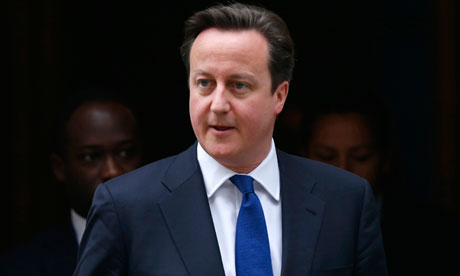
David Cameron leaves No 10, Downing Street: many of his government's radical cuts and reforms are due to be introduced this week. Photograph: Andrew Winning/Reuters

Monday 1 April

Bedroom tax introduced
The aim is to tackle overcrowding and encourage a more efficient use of social housing. Working age housing benefit and unemployment claimants deemed to have one spare bedroom in social housing will lose 14% of their housing benefit and those with two or more spare bedrooms will lose 25%. An estimated 1m households with extra bedrooms are paid housing benefit. Critics say it is an inefficient policy as in the north of England, families with a spare rooms outnumber overcrowded families by three to one, so thousands will be hit with the tax when there is no local need for them to move. Two-thirds of the people hit by the bedroom tax are disabled.

Savings: £465m a year. As many as 660,000 people in social housing will lose an average of £728 a year.

Monday 1 April

Thousands lose access to legal aid
Branded by Labour a "day of shame" for the legal aid system, the cutoff to claim legal aid will be a household income of £32,000, and those earning between £14,000 and £32,000 will have to take a means test. Family law cases including divorce, child custody, immigration and employment cases will be badly affected.

Savings: a minimum £350m from £2.2bn legal aid bill.

Monday 1 April

Council tax benefit passes into local control
Council tax benefit, currently a single system administered by the Department for Work and Pensions, is being transferred to local councils with a reduction in funding of 10%. Council tax benefit is claimed by 5.9 million low-income families in the UK. The new onus on councils has come at a time when local government funding, according to the Institute for Fiscal Studies, has fallen by 26.8% in two years in real terms. A Guardian survey of 81 councils last week found many claiming they face difficult cuts, with almost half saying they were reducing spending on care services for adults. This also comes at a time when 2.4m households will see a council tax rise.

Savings: up to £480m a year, but depends on decisions of local councils.

Monday 1 April

NHS commissioning changes for ever
An NHS commissioning board and a total of 240 local commissioning groups made up of doctors, nurses and other professionals will take control of budgets to buy services for patients. They will buy from any service providers, including private ones so long as they meet NHS standards and costs. Strategic health authorities and primary care trusts disappear.

Costs: £1.4bn, mainly in redundancies, followed by savings as high as £5bn in 2015 owing to fall in staff numbers.

Monday 1 April

Regulation of financial industry changes
The Financial Conduct Authority and Prudential Regulation Authority, housed in the Bank of England, replace the Financial Services Authority. The Bank promises these changes do not represent the death and Easter resurrection of the same body. A new, proactive supervisory approach towards the City is promised, focused on outcomes rather than a tick-box culture. It has powers to prosecute, throw people out of the industry and withdraw a bank's licence. Above all it monitors risk to the financial system as a whole.

Saturday 6 April

50p tax rate scrapped for high earners
Announced in the 2012 budget. George Osborne said the 50p rate, introduced in April 2010, caused massive distortions in 2010-11 and raised only £1bn, rather than the £2.5bn forecast by Labour back in 2009. HMRC found £16bn was deliberately shifted into the previous tax year, largely by owner/directors of companies taking dividends in the previous year when the highest rate was still 40p. Labour claims 13,000 millionaires will get a £100,000 tax cut.

Monday 8 April

Disability living allowance scrapped
The personal independence payment (PIP) replaces the disability living allowance and, according to the DWP, is not based on your condition, but on how your condition affects you, so narrowing the gateway to the PIP.

It will contain two elements: a daily living component and a mobility component. If you score sufficient points, a claim can be made. Assessments will be face-to-face rather than based on written submissions, starting in Bootle benefits centre, handling claims across the north-west and north-east.

Monday 8 April

Benefit uprating begins
For the first time in history welfare benefits and tax credits will not rise in line with inflation and will instead for the next three years rise by 1%. Had there been no change benefits would have risen by 2.2%. Disability benefits will continue to rise in line with inflation.

Savings: £505m in the first year, rising to £2.3bn in 2015-16. Nearly 9.5 million families will be affected, including 7 million in work, by £165 a year.

Monday 15 April

Welfare benefit cap
The most popular of the welfare reforms will begin on 15 April in the London boroughs of Bromley, Croydon, Enfield and Haringey. The intention is that no welfare claimants will receive in total more than the average annual household income after tax and national insurance – estimated at £26,000. Other councils will start to introduce it from 15 July and it will be fully up and running by the end of September. Some estimate 80,000 households will be made homeless. The DWP says around 7,000 people who would have been affected by the cap have moved into work and a further 22,000 have accepted employment support to move into work. Households where someone is entitled to working tax credits will not be affected.
Savings: £51m over three years.

28 April

Universal credit introduced
The new in- and out-of-work credit, which integrates six of the main out-of-work benefits, will start to be implemented this April in one jobcentre in Ashton-under-Lyne, Greater Manchester. The aim is to increase incentives to work for the unemployed and to encourage longer hours for those working part-time. It had been intended that four jobcentres would start the trial in April, but this has been delayed until July, and a national programme will start in September for new claimants. They will test the new sanctions regime and a new fortnightly job search trial, which aims to ensure all jobseeker's allowance and unemployment claimants are automatically signed onto Job Match, an internet-based job-search mechanism. Suspicion remains that the software is not ready.

Guardian

Bedroom Tax and ESA in the news 31/03/2013

Sue Marsh talked to LBC radio at 20:00 about the people dropping their claim for ESA before their work capability assessment.

Sue also talked to Sky News at 15:30.


Owen Jones discussed the Bedroom Tax with Robert Oxley of the Tax Payer’s Alliance on Sky News at 17:30


Lisa Egan talked about ESA on Radio 5 Live followed by Grant Shapps.
Download: Lisa%20Egan%20and%20Grant%20Shapps%20on%205%20Live%202013-03-31.mp3

 
Trialia Hall debated the bedroom tax with Edwina Currie on Radio 5 live at 23:20 30/03/2013
Download: Trialia%20Hall%20discussing%20Bedroom%20Tax%20Radio%205%202013-03-30.mp3

 
(The above audio clips may not work properly in Chrome at the moment. I’m working on it.)


Here are some of the cabinet millionaires who gave themselves a tax cut today

(not satire – it’s UK today!)

Here are just a few of the millionaire government ministers who gave themselves a tax cut today

Lord Strathclyde worth £10m
Philip Hammond worth £7.5m
George Osborne worth £4.6m
Jeremy Hunt worth £4.5m
David Cameron worth £4m
Dominic Grieve worth £3m
Francis Maude worth £3m
William Hague worth £2.5m
David Laws worth £1m-2m
Nick Clegg worth £1.9m
David Willetts worth £1.9m
Theresa May worth £1.6m
Oliver Letwin worth £1.6m
Owen Paterson worth £1.5m
Kenneth Clarke worth £1m+
Sir George Young £1m+
Iain Duncan Smith worth £1m+
Michael Gove worth £1m+

NB Grant Shapps isn’t on the list because it’s his alter ego Michael Green who’s a millionaire, not him.

No doubt some of these people will be helping the economy by spending some of their £100,000 tax cut on bottles of champagne in celebration this evening.
.
Note – a few people have rightly pointed out that ‘worth’ is not the same as net income. The problem is that net income is a meaningless figure – it’s whatever their accountant wants it to be. That leaves us with only their (declared) worth to go on. I agree, it’s entirely possible their accountants will declare these millionaires are so ‘poor’ that they’re not entitled to a tax cut.
It’s still millionaires voting to give millionaires a tax cut though.

.
http://tompride.wordpress.com/2013/04/01/here-are-some-of-the-cabinet-millionaires-who-gave-themselves-a-tax-cut-today/

Scrounger narratives explained


The objective of this series is to try to explain seemingly complex socio-economic theories and concepts in everyday language and show how these ideas are being misused, abused and ignored by governments and powerful international organisations.

  
  Number 11:        What is..... a scrounger narrative?


Anyone that hasn't noticed the propaganda war being waged against the unemployed by the government and the right-wing press you must have been living in a vacuum. To anyone with the slightest clue about what mass unemployment is, the sight of government ministers and the baying right-wing press deriding the unemployed as "idle", "lazy", "skivers", "dossers" and "scroungers" is revolting. For the vast majority of people suffering worklessness, unemployment is not a "lifestyle choice" as the right-wing crowd would have us believe, it is the result of failed (or even deliberate) macroeconomic policy.

Firstly I'll give a quick explanation of what I mean by the term "justification narrative". Put simply a justification narrative is a simplistic propaganda story aimed at the creation of political memes; little "soundbytes" of propaganda that allow the reactionary, cognitively illiterate individual to believe that they have an expert understanding of complex political and economic issues because they have a collection of simplistic narratives and idioms to explain away political and economic phenomena. (I've written an article defining justification narratives in greater detail which can be found here).


The Tories love to create the justification narrative that the unemployed are largely idle and feckless layabouts sponging off the hard working people of the UK. It helps them to divide society by stoking resentment amongst working people, that those without work are living "a life of luxury" on benefits. It is a classic example of a political distraction technique. Those responsible for the economic crisis and the ongoing unemployment crisis are the corrupt self-serving politicians, the reckless bankers,
the something-for-nothing property speculators and the corporate fatcats, yet the Tories and the right wing press would have us believe that the crisis was caused by the poorest people in society. They are directing us to blame the victims of the crisis rather than the perpetrators. They are directing us to blame the symptoms rather than the disease.


Neoliberal financial sector deregulations and reckless financial sector activity caused the economic crisis, but the Tories and the right-wing press believe that the public really are gullible enough to blame the poorest people in society, many of whom have lost everything they valued (their job, their income, their home, their self-esteem, their family) and are now surviving on subsistence welfare payments. They really believe that they can con us into blaming the victims, rather than blaming those that made themselves fat with their reckless property speculation, dodgy expenses claims, corporate kickbacks, brazen profiteering, corruption, derivatives gambling, insider trading, tax-dodging, money laundering, Libor rigging. The corporations and millionaires that created the crisis are getting huge tax cuts, whilst the poor get abused as feckless scroungers.


The idea of the "scrounger narrative" is to create a simplistic justification narrative that the unemployed are scroungers, in order to justify ideological attacks on the welfare state. The most effective justification narratives rely on stoking emotional responses, and one of the most powerful is the sense of injustice. The emotional response is important because people tend to allow their anger to override their critical faculties when they are confronted with a perceived injustice. 

The injustice that they are presented with in this case is : "Why should you have to work hard for what you've got, whist those on benefits don't?". The "scrounger narrative" is often backed up with extreme individual cases, cherry-picked statistics or outright lies.

Once the reactionary thinker has had their head filled with "scrounger narratives" they then go around spreading "scrounger narratives" of their own, combining the misleading and inaccurate bile that they've read in the right wing press or heard from a Tory spokesperson, with their own anecdotal evidence. People don't seem to realise that by spreading these anti-unemployed "scrounger narratives" they are actively fighting the Tory party propaganda war them.


Perhaps the most notable thing about this right-wing anti-unemployed rhetoric is the fact that it so transparently inaccurate. Looking to the brazenly manipulated headline unemployment statistics for answers is notoriously naive, given that over the course of decades successive governments have found countless new ways to rig the headline unemployment figures downwards. However clear indicators can be found that the UK is undergoing a mass unemployment crisis in the long-term and youth unemployment statistics. Since the Tory led coalition came to power in 2010 long -term unemployment has risen by 115,000 for those out of work for longer than one year and by 167,000 (+58.8%) for those out of work for longer than two years. The general level of youth unemployment has risen by 87,000. The long-term youth unemployment figures are even worse. 18-24 year olds out of work for longer than a year has risen by 102,000 to 257,000 (+65.8%) and those out of work for two years or more has risen from 67,000 to 107,000 (+59.7%). (figures calculated from the June 2010 & March 2013 ONS Labour Market Statistics).

When we consider these statistics it is important to remember that the tens of thousands of people that are coerced onto Iain Duncan Smith's unlawful Labour party approved
Workfare schemes are misleadingly excluded from the calculations and DWP management have been setting secretive targets to strip people of their benefits (the league tables of these benefits sanctions are here). It would be shocking enough that long-term unemployment and long-term youth unemployment have skyrocketed by 60% in three years even if the Tory government and DWP were not also engaged in such transparent efforts to manipulate the figures downwards.

The fact that long-term and youth unemployment have skyrocketed under the Tory led coalition, despite their best efforts to "juke the stats" should be evidence that neither their economic policies, nor their welfare reform policies are working. They keep up the rhetoric of "ending benefits dependency", "making it pay to work", "strivers and skivers", but the fact is, that the macroeconomic policies they are imposing on the nation are making the unemployment situation worse. If they define the long-term unemployed as "feckless scroungers" the number of "feckless scroungers" has risen by 60% since the Tories came to power!

The idea that such huge increases in long-term unemployment are due to hundreds of thousands of people suddenly deciding to put their feet up and claim benefits because they can't be arsed to work, and doing so during the most prolonged financial crisis in living memory is lamentable gibberish. But yet, that's what the Tories would have you believe; that mass unemployment is caused by a contagion of laziness, rather than by financial crises. They want you to believe the outright lie that there are plenty of jobs out there, but that the unemployed are just too lazy to do them.


Perhaps the most brazen aspect to the Tory "scrounger narratives" is that they use them in conjunction with the "we must cut benefits to make work pay" narrative. Firstly, it must be pointed out that the most obvious way to make work pay, is to increase the National Minimum Wage to make it a living wage, not to slash subsistence benefits. However the most shocking aspect is the fact that the caricature of the feckless scrounger is being used to justify benefits cuts that actually have more impact upon the working poor.  The benefits that are to be cut in real terms by this government include Working Tax Credit, Child Tax Credit, Housing Benefit, Child Benefit, Council Tax Benefit, Maternity Pay, Paternity Pay and Statutory Sick Pay. The real terms reductions in payments to ordinary working families massively outweigh the reductions in payments to the unemployed. By using "scrounger narratives" and empty rhetoric to justify these attacks on the working poor, the Tories have demonstrated that their claims that they are trying to "make work pay" are lies, just so much empty rhetoric that is directly contradicted by what they are actually doing. You don't make work pay" by inflicting real terms cuts on the incomes of working people!

The Tories and the right-wing press really believe that the British public are so gullible that they can be tricked into supporting attacks on the working poor through the invocation of "scrounger narratives" and other pathetic propaganda techniques. Judging by the sheer number of people that turn up on my Another Angry Voice facebook page to spew angry "scrounger narratives" of their own, perhaps the Tories and the right-wing press are right about the ease with which they can hoodwink the public? Perhaps the working people of this country really are so gullible that they can be tricked,
by the invocation of a few simplistic scrounger narratives, into actually fighting the Tory propaganda war against their own labour rights, welfare entitlement and financial interests?


Another Angry Voice

The incompatibility of Christian ethics and modern Conservativism [AAV]


On Easter Sunday 2013, the day before "Bedroom Tax" was to be rolled out, Paul Morrison from the Methodist church, speaking on behalf of a coalition of churches (Baptist Union, Methodist church, United Reformed church, Church of Scotland) spoke out against the economic attacks and the propaganda war against the poorest and most vulnerable people in society being conducted by the current government. He was highlighting a report by these churches called "The Lies We Tell Ourselves: Ending Comfortable Myths About Poverty" (which is well worth a read).

This criticism of government welfare policy comes just a couple of weeks after the new Archbishop of Canterbury slammed the government for their policy of inflicting real terms cuts on benefits for the unemployed and the working poor alike (and their families) in a letter to the Telegraph signed by 43 of his Bishops.

Paul Morrison raised a number of important issues. Here are a few selected quotes:
"The British public has come to believe things about the poorest in our society which are just straightforwardly not true. The public believes that the major cause of poverty is laziness, yet the majority of people in poverty work. How can that be the case?"
"It is an understanding of people that they somehow deserve their poverty, that they are somehow 'lesser', that they are not valued. The churches believe that they are valued and we believe that they should be treated much more fairly than they are being."
 "We saw that people who we value, who we believe God values and God loves, we saw them being insulted day in and day out in the media, and that needed to stop. The consequence of the attitudes towards the poor is that welfare cuts like this become more acceptable, so it's right that we criticise that too."
Whatever your stance on God and organised religion, it is worth noting that these churches have collaborated to do what they think is right. They have decided to put their doctrinal differences aside and collaborate in order to defend the poorest and most vulnerable people in society, not because of a tribalist desire to protect their own kin, but because they believe that they have a moral obligation to do it.

The Tories obviously countered these criticisms with a load of cherry-picked statistics, "making work pay" narratives and "scapegoating of the workless" aimed at building public support for their malicious economic attacks on the weakest members of society.

Using the technique of stirring a sense of injustice that "layabouts" are getting more than hard working people is an effective (if utterly revolting) propaganda technique because the sense of injustice is one of the most powerful human emotions. Telling working people that they are getting less than a bunch of "idle scroungers" is a deliberate attempt to build support for their economic attack programme against the poor by stoking the sense of injustice. People become so incensed at the cited unfairness, that they don't even bother to think about the implications of real terms benefits cuts for everyone of working age, before deciding their approval. Many people allow themselves to get so caught up in the injustice of "idle scroungers and hard workers" that they'll approve cuts to their own family budget, since the vast majority of welfare payments go to ordinary working families (Working Tax Credit, Child Tax Credit, Housing Benefit, Council tax Benefit, Child Benefit, Maternity Pay, Paternity Pay, Sick Pay). People allow themselves to get so would up about a tiny minority of "idle scroungers" that they don't even consider that the right-wing "scrounger narratives" are being used to justify much wider real terms cuts to all of the aforementioned benefits which largely go to the working poor.

The "making work pay" narrative is utterly flawed becuase the vast majority of benefits being cut are benefits that are paid to the working poor! By thrusting the working poor deeper into poverty with their real terms cuts to working benefits, they are actually reducing the incentive to work!

Another problem with these lame Tory ripostes was actually raised by Paul Morrison in the comments that the Tories were trying to rebut. Responding to a statement that the majority of people in poverty (and receiving benefits) are not unemployed, but actually members of working families with yet more "scrounger narratives" and scapegoating of the unemployed, is beyond disingenuous, it' an implicit acceptance that they have nothing to offer the debate but more of the same kind of propaganda that is under criticism in the first place.

Another problem with the Tory appeal to unfairness in order to build support for their "slash benefits to make work pay" strategy is that the best way to "make work pay" is actually to ensure that working people get a decent living wage. If the government increased the National Minimum Wage to make it a living wage, they could cut £billions from the welfare bill through reductions in subsistence benefits for the working poor (Working Tax Credits, childcare subsidies, Housing Benefit...). The reason the government won't take this common sense approach is obvious, they won't enforce decent living wages in order to cut the welfare bill, because making corporations pay decent wages would conflict with the true Tory party agenda of serving corporate interests.

The Tories won't increase the National Minimum Wage in order to reduce state subsidisation of the corporatations that pay poverty wages, just as they won't reduce the state subsidisation (via housing benefits) of the private rental sector by introducing rent caps and forcing private landlords to comply with the same regulations as the social housing sector. Their agenda isn't to reduce welfare spending at all, it is actually to ensure that ever greater amounts of state spending go towards the subsidisation of wealthy Tory voters and their millionaire financial backers.


The most grotesque element to the government loading the poor and vulnerable with the burden of their failing economic austerity experiment, is that with the other hand they are lavishing the already wealthy with tax cuts, corporate welfare schemes and tax loopholes. All of their rhetoric about the importance of cutting welfare is not only invalidated by the dodgy and inaccurate rhetoric they resort to, it is invalidated by the fact that at the same time they insist that welfare must be cut, they are planning ever more handouts to the wealthy. In the very same week that the collective punishment of social tenants ("Bedroom Tax") is initiated, the 13,000 highest earners in the UK are to be handed a £2,000 a week tax cut.

It is absolutely obvious that Christian ethics are fundamentally incompatible with modern Conservativism. It would take a mind-boggling amount of cognitive dissonance to believe that it is possible to follow the teachings of Jesus (charity, equality, compassion...) yet approve of hardline greed worship and materialism in the form of neoliberal economic doctrine as adhered to by the Tory party.

The various churches haven't been so bold as to state the obvious; that the Tory government is brazenly serving the interests of the rich at the expense of the poor and vulnerable and that modern Conservativism is fundamentally incompatible with the teachings of Christ. But it is still a noble endeavour to defend the interests of the poor and vulnerable and to counter the propaganda strategies of the Tory party and the baying right-wing press. Even though, in my opinion, these religious condemnations of the Tory agenda doesn't go far enough, it is great to see that these various religious organisations have finally begun waking up to what the current government is doing, and stirred themselves into action.